Geography can feel like a secondary consideration during capture and proposal planning. Once a program moves into staffing, it can become one of the biggest constraints.
A technical role that is relatively easy to recruit for in one market may be difficult in another. Relocation adds time, cost and uncertainty. And for cleared or highly specialized work that needs to happen on site, remote work often isn’t an option.
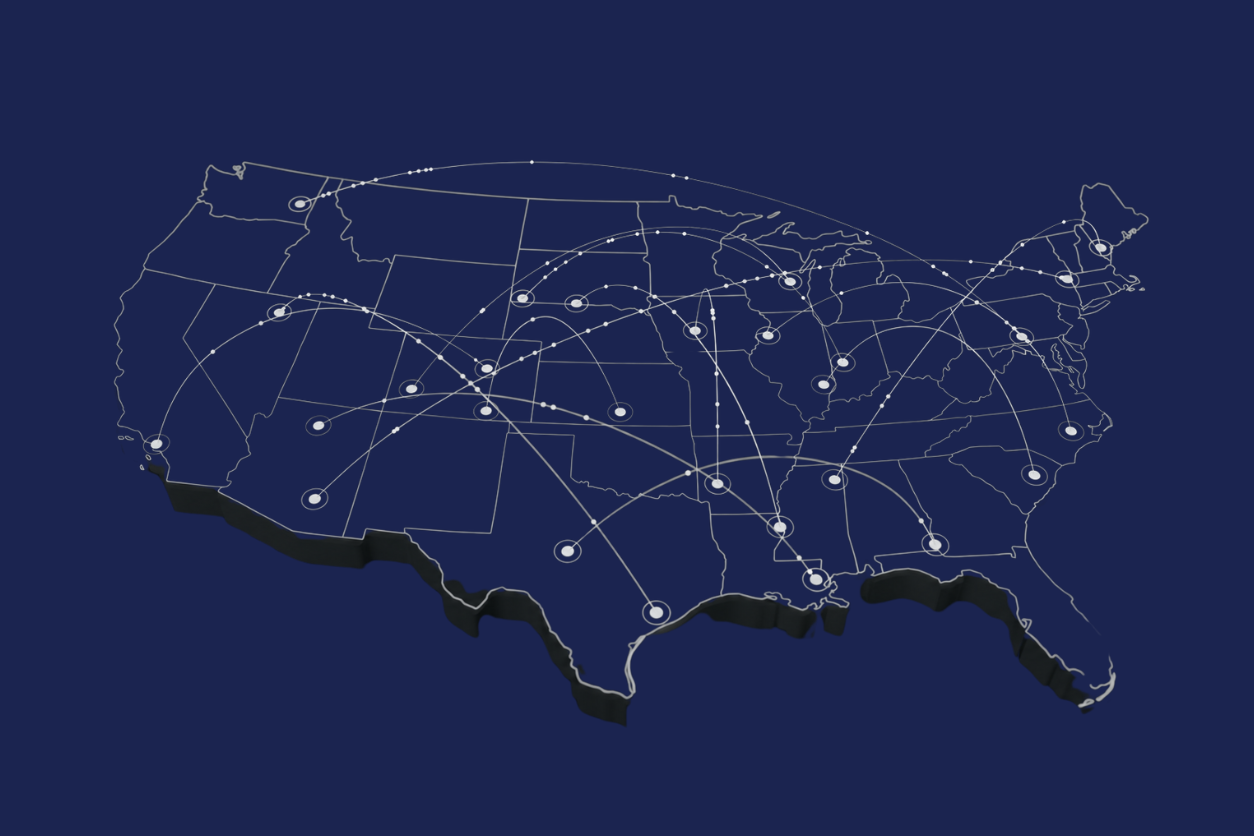
That matters because defense work increasingly draws on expertise from different parts of the country.
In July 2026, the Defense Innovation Unit outlined plans to continue expanding its national network of Defense Innovation OnRamp Hubs. Among the factors DIU considers are workforce availability and geographic distribution — a useful reminder that where talent is located still matters to how defense innovation gets built.
California and Massachusetts are good examples. Current Aerospace Industries Association data shows California supports nearly 274,000 aerospace and defense jobs, while Massachusetts supports more than 33,000 under the same industry definition. Both have deep technical talent pools, but they are very different markets.
A federal contractor staffing strategy built around only one region can leave program teams with fewer options when the work expands or moves.
That raises a practical question:
Does our talent strategy reach the places where the work may need to happen?
Defense Innovation Is National. Talent Markets Are Still Regional.
The Department of Defense increasingly looks beyond traditional acquisition channels for technology and expertise. DIU describes its regional strategy as connecting defense needs with companies, laboratories, universities, investors and talent across key innovation ecosystems nationwide.
But national opportunity does not create one national labor market.
On the West Coast, California has one of the country’s deepest concentrations of aerospace, space, engineering and defense talent. Silicon Valley is also home to the Defense Innovation Unit.
Across Massachusetts, the defense ecosystem has its own concentration of capability. The Commonwealth’s 2026 SHIELD strategy identifies a network that includes research institutions, defense contractors, advanced manufacturers and government partners. Using a broader definition of the defense and national security sector, Massachusetts estimates the industry supports approximately 140,000 jobs and $48.6 billion in annual economic activity.
Organizations including MIT Lincoln Laboratory, MITRE, Draper, RTX and Hanscom Air Force Base contribute to that ecosystem, along with universities, startups and advanced-manufacturing organizations.
For capture and program leaders, the point isn’t that one coast has a better talent market than the other.
They offer access to different concentrations of experience, employers and technical talent.
A staffing strategy built around only one region can become limiting when the work expands beyond it.
Geography Can Become a Program Staffing Risk
A national requisition does not necessarily create a national candidate pool.
For specialized and cleared technical roles, location can narrow an already limited market even further.
Relocation Adds Another Variable
The right engineer may exist — but not where the program needs them.
Moving a candidate across the country can introduce additional timing, cost and personal considerations into an already difficult search. And when a role requires an on-site presence or access to a secure environment, remote work may not solve the problem.
That doesn’t mean relocation should disappear from the strategy. It means contractors shouldn’t have to depend on it for every difficult role.
A broader recruiting footprint gives contractors another place to start: with qualified people who already live near the work.
Clearance and Geography Narrow the Pool Together
Digital Prospectors has already explored why government contractors are struggling to staff technical programs as clearance requirements, specialized skills and compressed timelines narrow the available candidate pool.
Geography adds one more filter.
A candidate may have the right clearance and technical background but be hundreds or thousands of miles from the place of performance. Another market may have a stronger local concentration of professionals with adjacent experience.
Knowing where that talent exists before the role becomes urgent gives the program team more room to work.
Follow-On Work Can Change the Talent Map
Winning an initial program does not necessarily mean every future phase will have the same workforce requirements.
A follow-on contract may add new capabilities, expand the place of performance or require expertise that is more concentrated in another market.
When that happens, a recruiting model that worked for the initial program may not work for the next phase.
Starting from zero in a new market costs time.
Existing relationships across multiple regions give program teams a head start.
Instead of asking whether every qualified person can be convinced to relocate, teams can ask:
Where does this expertise already exist, and how do we reach it?
That is a more useful question for a program that needs to move quickly.
A Bi-Coastal Talent Network Reduces Dependence on Relocation
A broader federal contractor staffing footprint shouldn’t just mean more resumes from more ZIP codes. It should give program teams more realistic ways to staff the work.
Start local before asking someone to relocate.
With established networks in more than one region, contractors can first look for people who already live near the program location.
Build more than one talent pipeline.
Capture teams don’t always know which labor categories will become hardest to fill. Visibility into multiple regional markets can surface staffing risks earlier.
Keep continuity when the geography changes.
A staffing partner that already understands the client, the program environment and the talent requirements doesn’t have to relearn the business when a new location comes into play.
The point of national reach isn’t to recruit everywhere. It’s to have more ways to get the right people where the work needs them.
National Reach Is Only Useful if the Relationships Are There
There’s a difference between having access to a national candidate database and having relationships in the markets where clients need talent.
A database can tell you where people live. A network tells you where the relationships are.
That matters in specialized government and defense recruiting. Understanding the person behind the resume — their experience, location, current program, career priorities and what might realistically make them consider a move — can be just as important as finding the right keywords.
Bigger isn’t automatically better. The value of national reach is having credible connections in more places while still working with a partner who knows the client and the work.
That combination — broader reach without losing the relationship — is where a staffing partner can add real value.
Strategic Takeaway
Where the work happens should shape the talent strategy from the beginning.
When a program spans regions or may expand into new ones, established talent relationships in more than one market can reduce reliance on relocation and give program teams more ways to respond.
National reach is valuable when it helps program teams reach the right people where the work needs them.
Build the Talent Footprint Around the Program
For more than 25 years, Digital Prospectors has connected specialized technical talent with work that matters.
The December 2025 acquisition of San Jose-based Albin Engineering Services expanded Digital Prospectors’ Government Services and engineering reach from New England to California, adding established relationships on both coasts and a deeper national talent network.
For clients, that means access to talent relationships stretching from Silicon Valley and California’s defense-tech market to Greater Boston and New England’s national-security community — without starting over with a new partner every time the geography changes.
Today, Digital Prospectors supports government agencies and contractors across Secret, Top Secret and TS/SCI environments, including cleared IT and engineering, systems and infrastructure, cybersecurity, program and technical support, and compliance-driven engineering environments.
Whether you’re preparing for a multi-region program, expanding an existing team or planning for follow-on work in a new market, the goal is simple:
Have access to the right people wherever the work takes you.